Strategy
Assess your
current position
and future direction.
Explore Ideas
See your situation more clearly.
Clarity, Strategy, Direction, Action.
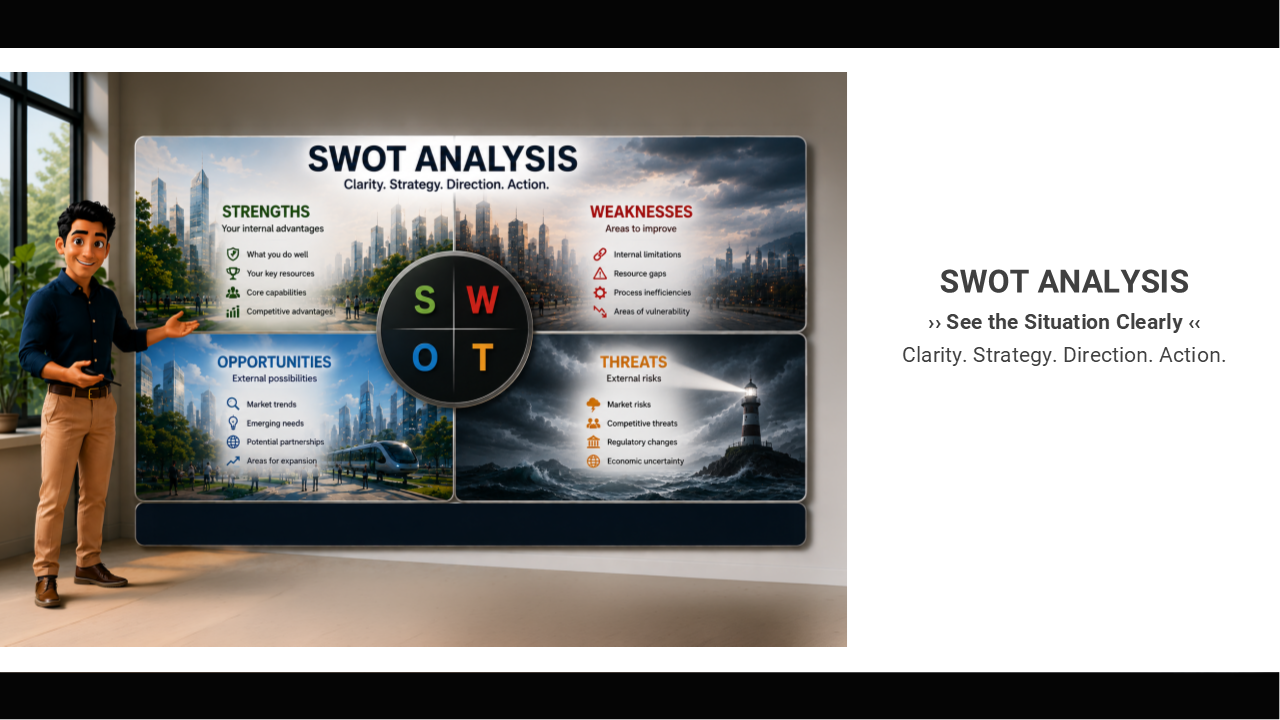
What is SWOT Analysis?
SWOT helps you examine your situation through four
practical lenses: strengths, weaknesses, opportunities, and threats.
The FreeThought SWOT app helps you move beyond a simple list,
guiding you toward clearer analysis, stronger priorities, and practical next steps.
When should I use it?
Assess your
current position
and future direction.
Identify
internal strengths
and external risks
before committing.
Explore
whether an idea
has enough strength
and opportunity.
Think through
personal strengths,
gaps, options, and risks.
Clarify
what helps or
blocks progress.
Compare the
positive and
negative forces
around a choice.
The SWOT Workflow
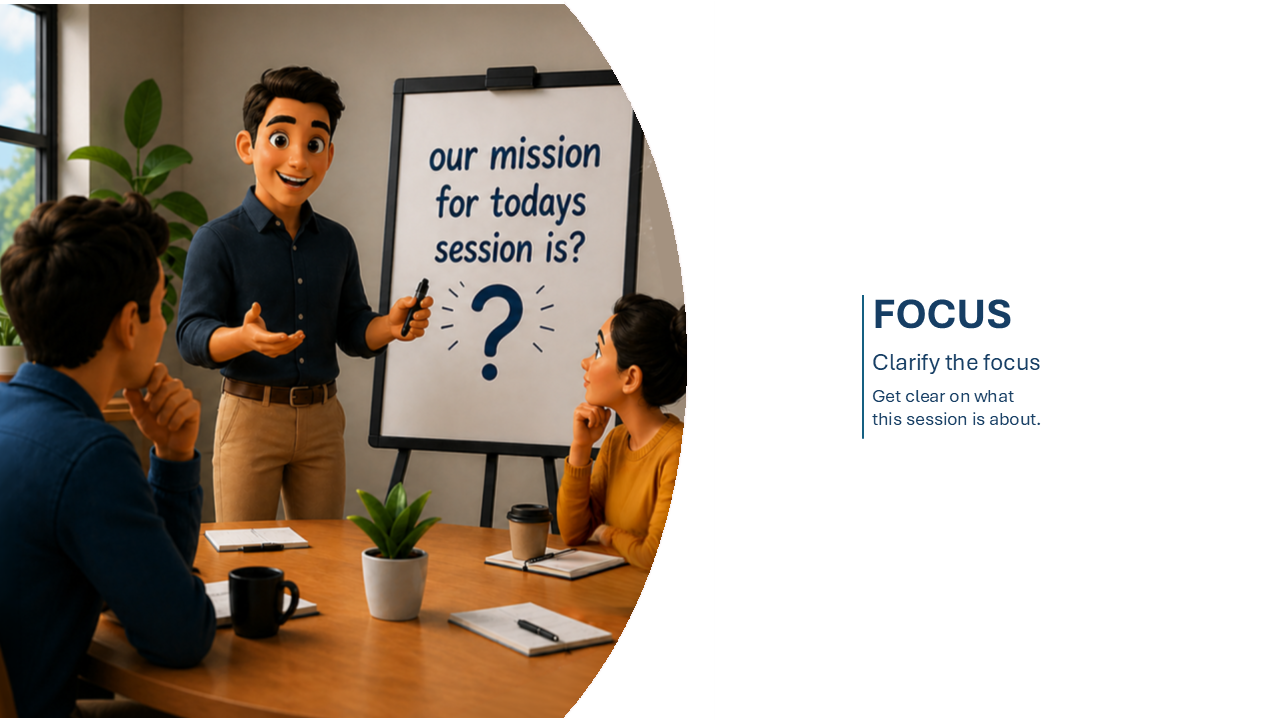
Stage 0
Get ready for session by deciding on
your focus, your aims, your boundaries,
your facts and who is going to be affected.
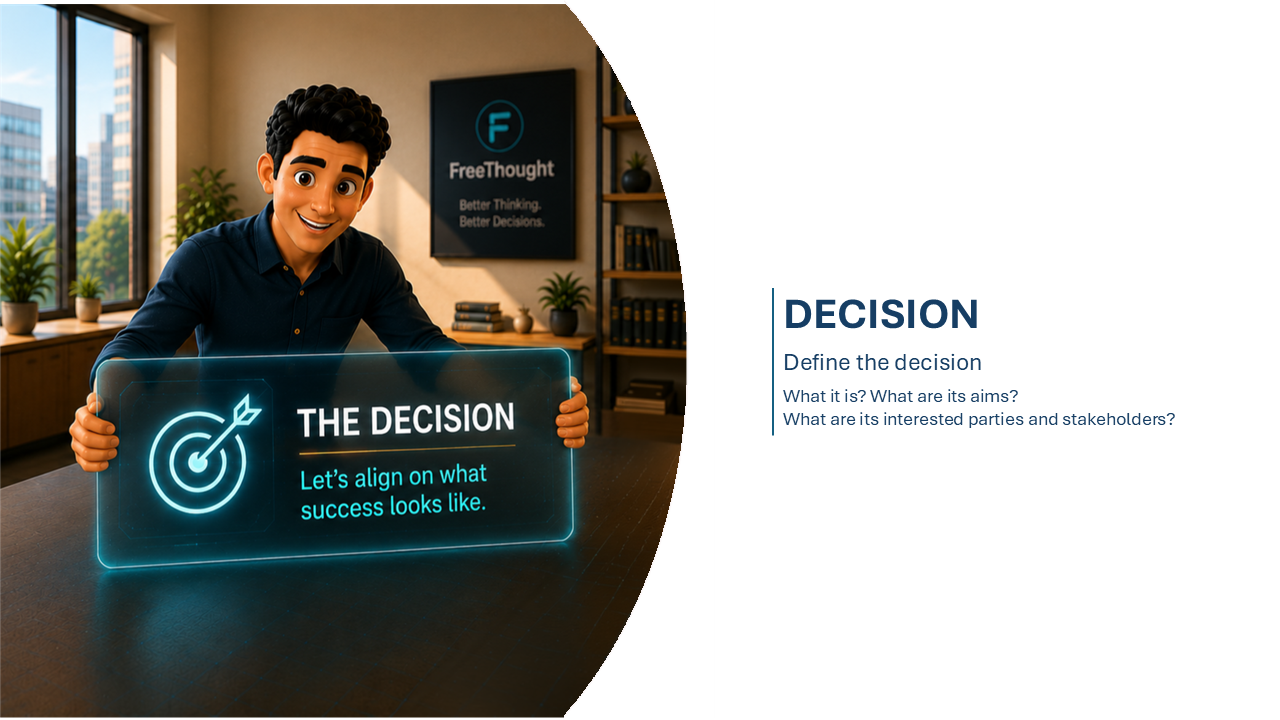
Stage 1
Define the decision, situation, question, or challenge
the SWOT analysis should clarify. This keeps the analysis
focused, so the SWOT output is not just a general list of
strengths, weaknesses, opportunities, and threats, which is
superficial, but a useful thinking tool for a real decision.
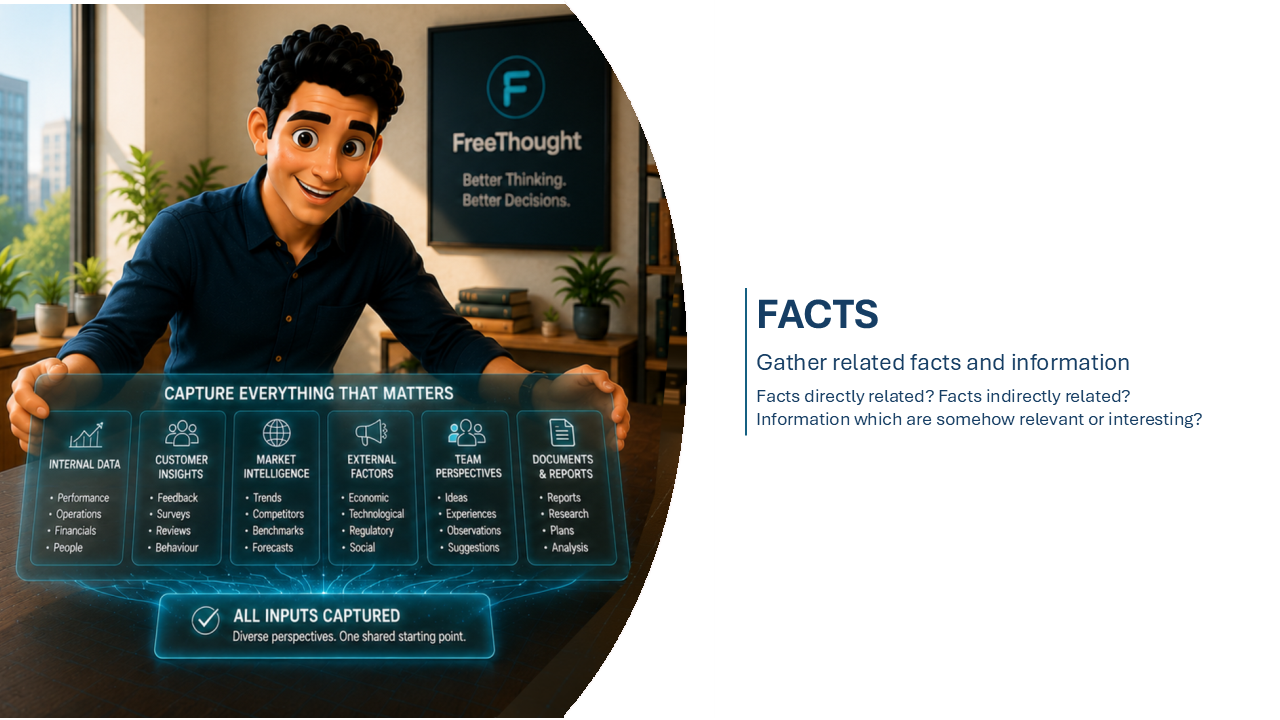
Stage 2
Gather the relevant facts before starting the SWOT.
This helps separate what is known from what is assumed,
uncertain, missing, fake-news, or based mainly on opinion.
Most people find a stronger SWOT begins with better information.
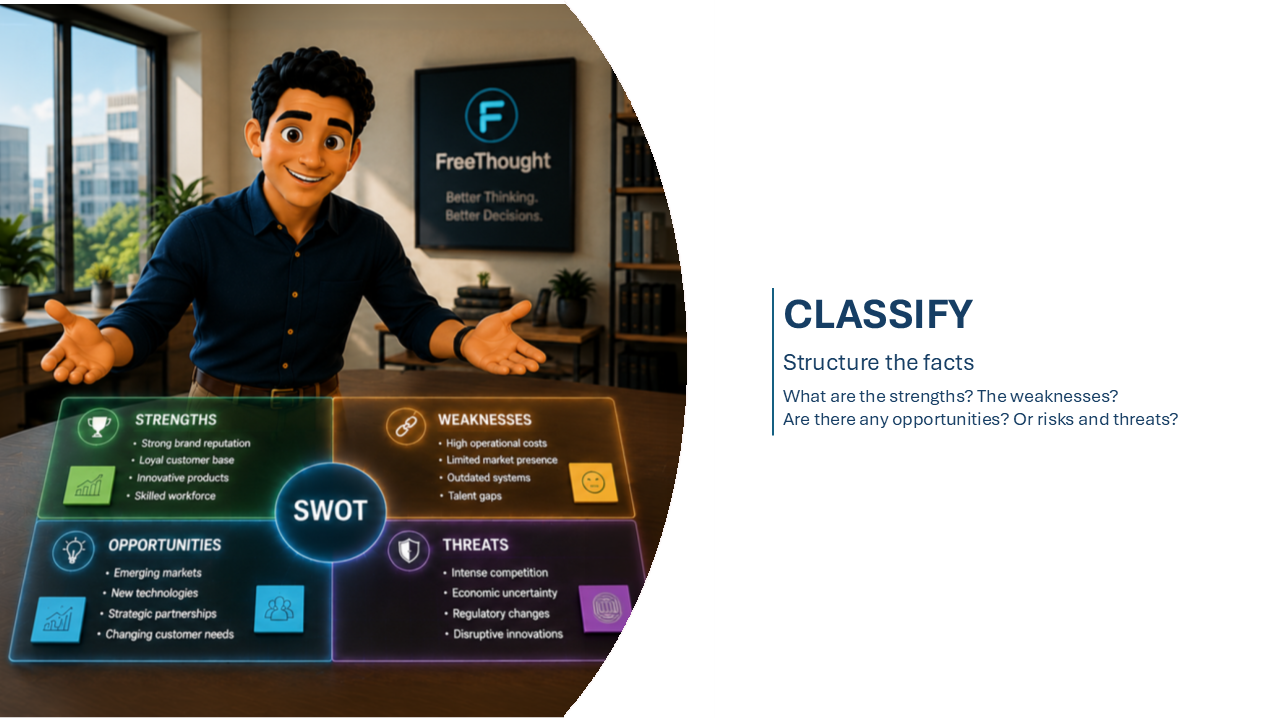
Stage 3
Sort the information into strengths,
weaknesses, opportunities, and threats.
This gives structure to the situation and
helps distinguish internal factors from external
factors, and helpful forces from harmful ones.
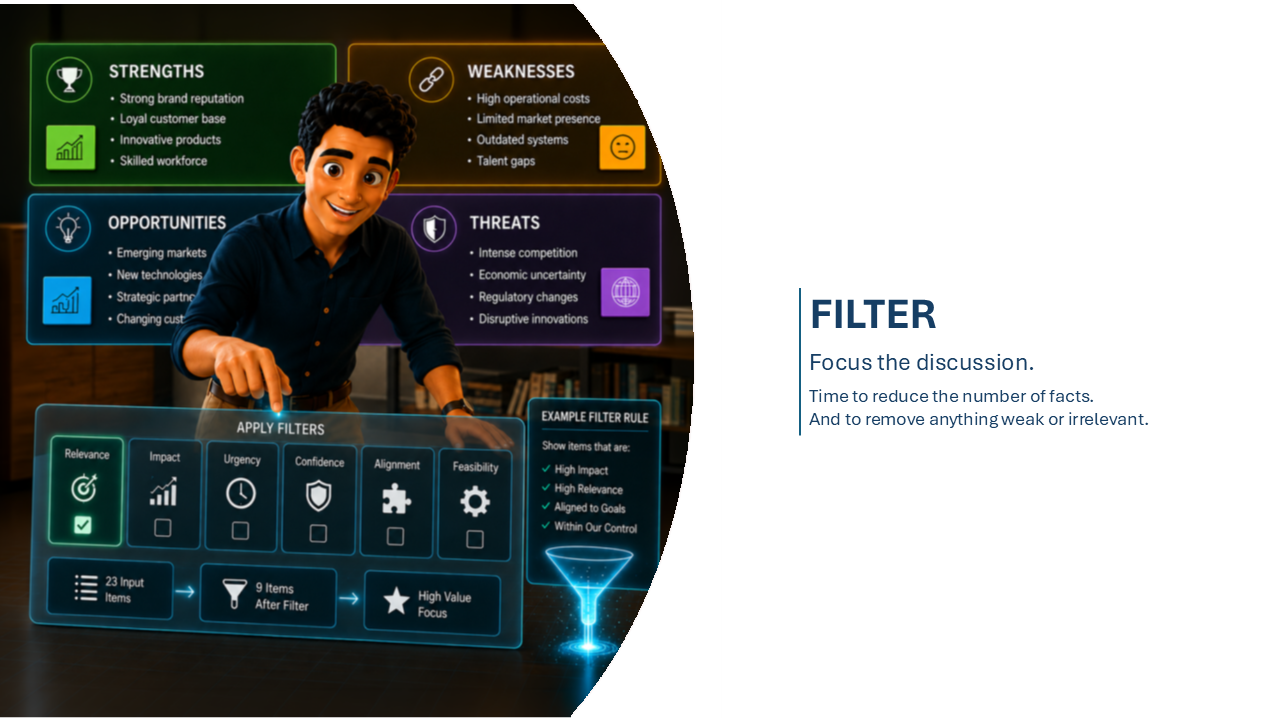
Stage 4
Identify which points matter most.
Not every item in a SWOT has equal
importance, so this stage helps remove clutter,
reduce repetition, and focus attention on the
factors most likely to influence the decision.
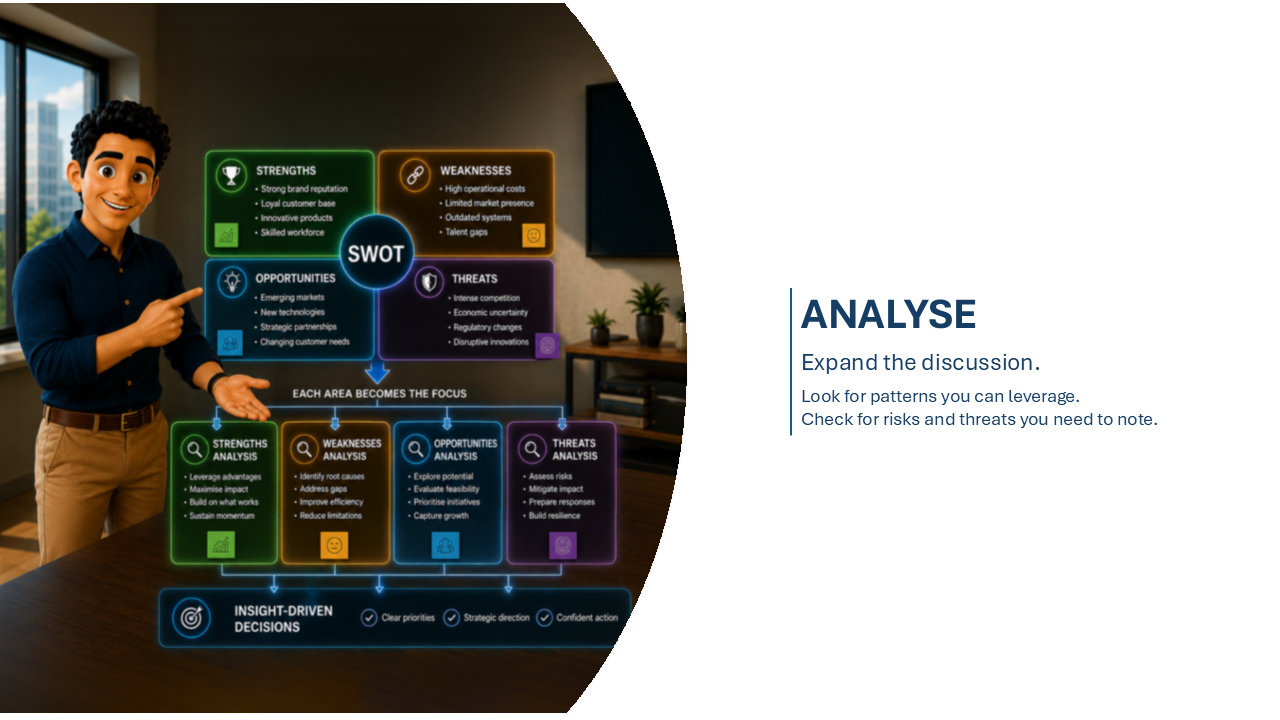
Stage 5
Look for patterns, relationships, tensions,
and implications across the SWOT. This is
where the analysis moves beyond four lists
and starts to reveal what the situation means.
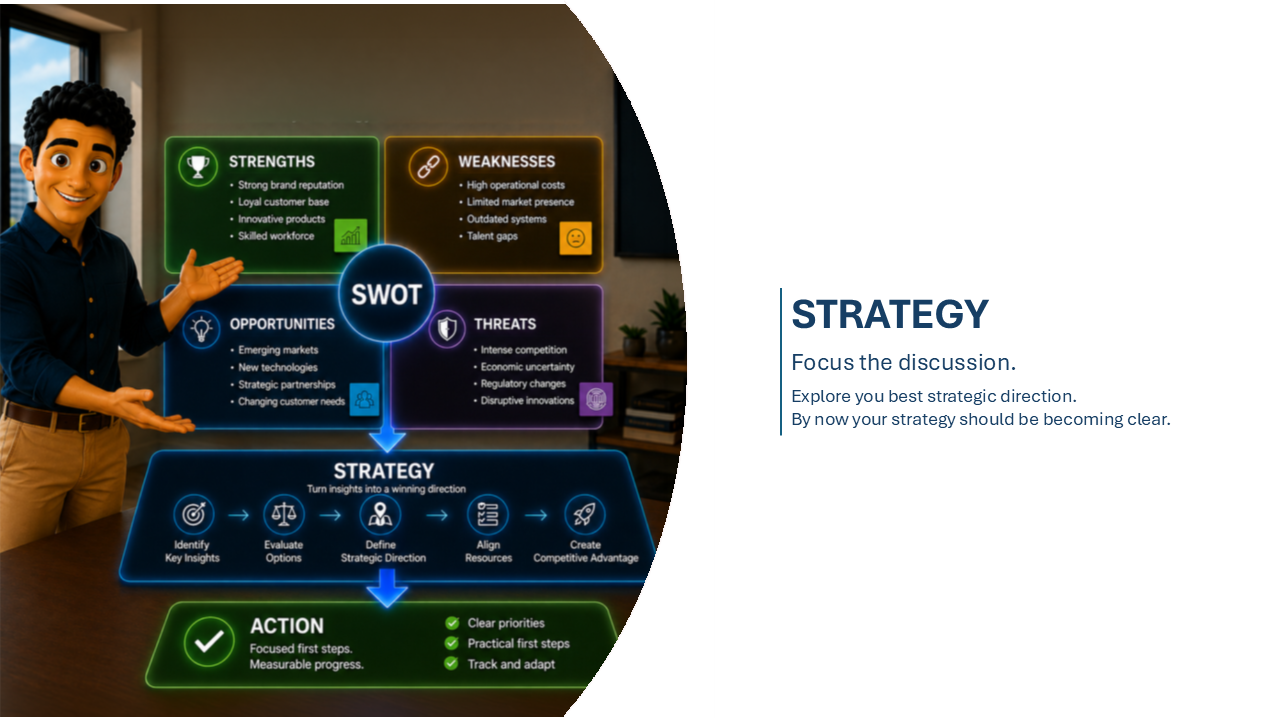
Stage 6
Turn the SWOT into practical strategic options,
priorities, and next steps. This stage helps the user
decide how to use strengths, reduce weaknesses,
seize opportunities, and prepare for threats.
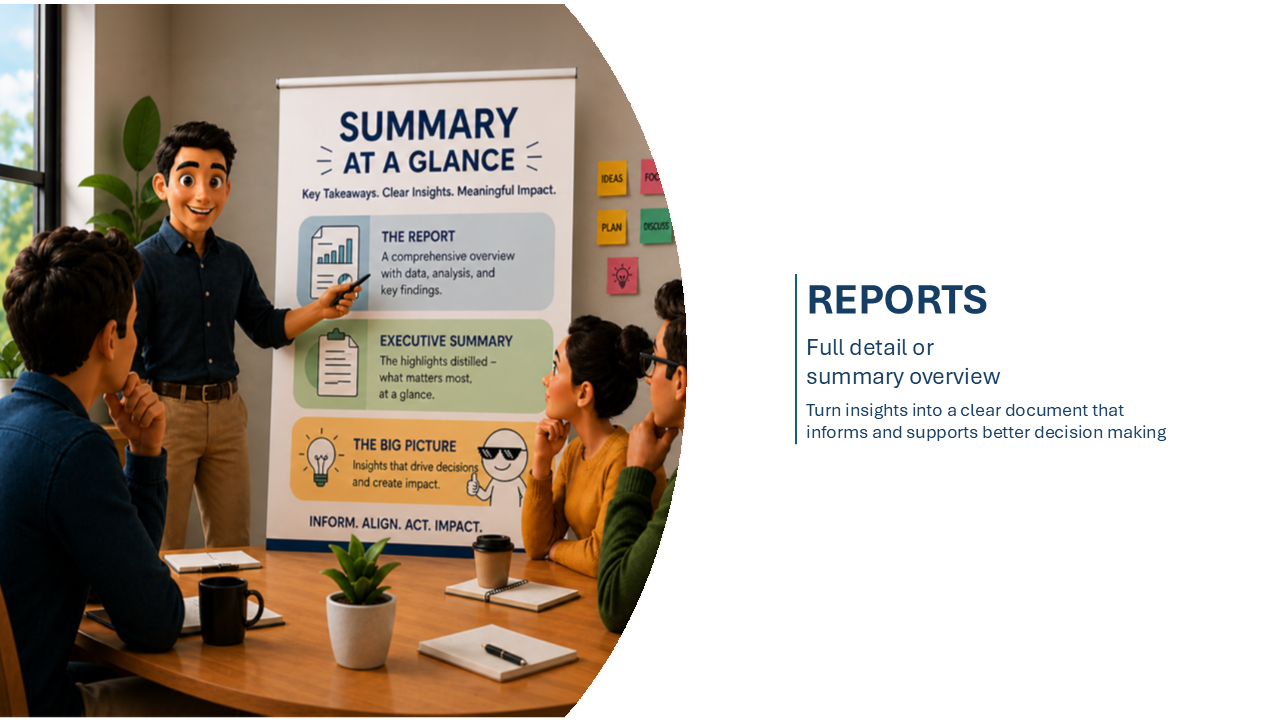
Stage 7
There are a number of reporting options.
Alongside options for making use of social media.
SWOT Coach
The SWOT Coach helps you understand the framework, avoid
shallow lists, practise the method, and apply SWOT to real situations.
Why use SWOT?
See positive
and negative factors
in one structured view.
Separate
what matters from
what is merely interesting.
Use strengths and
opportunities while reducing
weaknesses and threats.
Notice risks,
gaps, assumptions,
and external pressures.
Give teams a
shared structure
for discussion.
Move
from analysis
toward action.
Included with membership
For $35 per year,
subscription includes
SWOT Analysis and SWOT Coach.